News Media Coverage: Valley Vision Poll Finds Housing, Childcare, AI Readiness Shaping Economic Mobility Across Capital Region

Author: Chris Campbell, Sacramento Business Journal
May 15, 2026 – Housing affordability, access to childcare, transportation safety and artificial intelligence preparedness are increasingly shaping whether Sacramento-area residents can fully participate in the regional economy, according to the new Economic Mobility Poll released by Valley Vision.
Valley Vision is a Sacramento-based civic leadership organization focused on regional economic development, workforce, land use and quality-of-life issues across the capital region.
The report, produced in partnership with California State University Sacramento’s Institute for Social Research, surveyed 1,118 residents across Sacramento, Yolo, El Dorado, Placer, Sutter and Yuba counties in September and October 2025 about barriers to economic mobility.
The findings point to mounting concerns around the cost of housing, the affordability of childcare and uneven workforce preparation for AI-driven changes already reshaping industries and hiring needs.
Valley Vision CEO Evan Schmidt said the poll is intended to help policymakers, employers and economic development leaders better understand how interconnected those issues have become.
“An important piece of our work on We Prosper Together, part of the state’s California Jobs First program, was to work with thousands of residents on local strategies to advance equitable economic prosperity,” Schmidt said in an interview. “Several priorities came to the surface: attainable and affordable housing, reliable transportation, access to quality childcare and accessible career opportunities.”
Read the rest of the article at the Sacramento Business Journal: https://www.bizjournals.com/sacramento/news/2026/05/15/valley-vision-economic-mobility-findings.html
Capital Region Employers Discuss AI Implications Across Key Sectors

Today the pace and scale of technological change feels unprecedented, reminiscent of the early days of the World Wide Web. Artificial intelligence is rapidly reshaping how work is organized, how businesses operate, and how skills are defined.
On February 19th, Valley Vision hosted a webinar on The Changing Landscape of Work: Keeping Up with Emerging Technologies, examining how rapidly evolving technologies are reshaping employer needs and workplace practices across the Capital Region. The advisory gathered employers across sectors, including Accenture, the State of California (CalHR), Clutch, and Marshall Medical Center, each bringing a distinct sector perspective. They set the stage, conveying a universal message that AI is best viewed as an additive tool that re-engineers workflows, especially repetitive, data-heavy, or document-heavy tasks. They confirmed, AI is not about removing workers, but about freeing them to focus on higher-value, judgment-driven work. The panel emphasized that mid-level roles, particularly in operations and analysis, are seeing the most transformation today, while relationship-based and people-centered work, from clinical care to public service, remains deeply human.
In every conversation, the same truth emerged: AI literacy is no longer optional. Across the public and private sectors, organizations are seeking talent with a blend of critical thinking, adaptability, and digital fluency. Panelists agreed that employers want individuals who can use AI tools thoughtfully, employ a keen eye for accuracy, check outputs, and explain their reasoning. The message was clear: job seekers need to understand how AI applies to their field, come to job interviews prepared to discuss concrete examples, and employ critical thinking skills when utilizing AI in the workplace. A CalHR representative explained that California’s statewide approach centers on skill-building rather than displacement, noting, “AI is additive, not foundational.” This principle has to reinforce a future where technology amplifies human ability rather than replacing it.

A common sentiment among the panelists was that responsible AI adoption is a strategic decision, not a trend. Marshall Medical shared how its AI Oversight Committee ensures that new tools address clearly identified needs such as ambient scribe technology, which listens during patient visits and generates clinical notes, reducing documentation time for providers. The organization is also leveraging AI to optimize operating room scheduling and improve efficiency. Marshall’s approach ensures that technology supports employees rather than replacing them, aligning with the state’s emphasis on keeping workers involved in all AI assisted decision making. The common theme spoken is to keep people central in decision-making while letting AI handle repetitive, low value tasks.
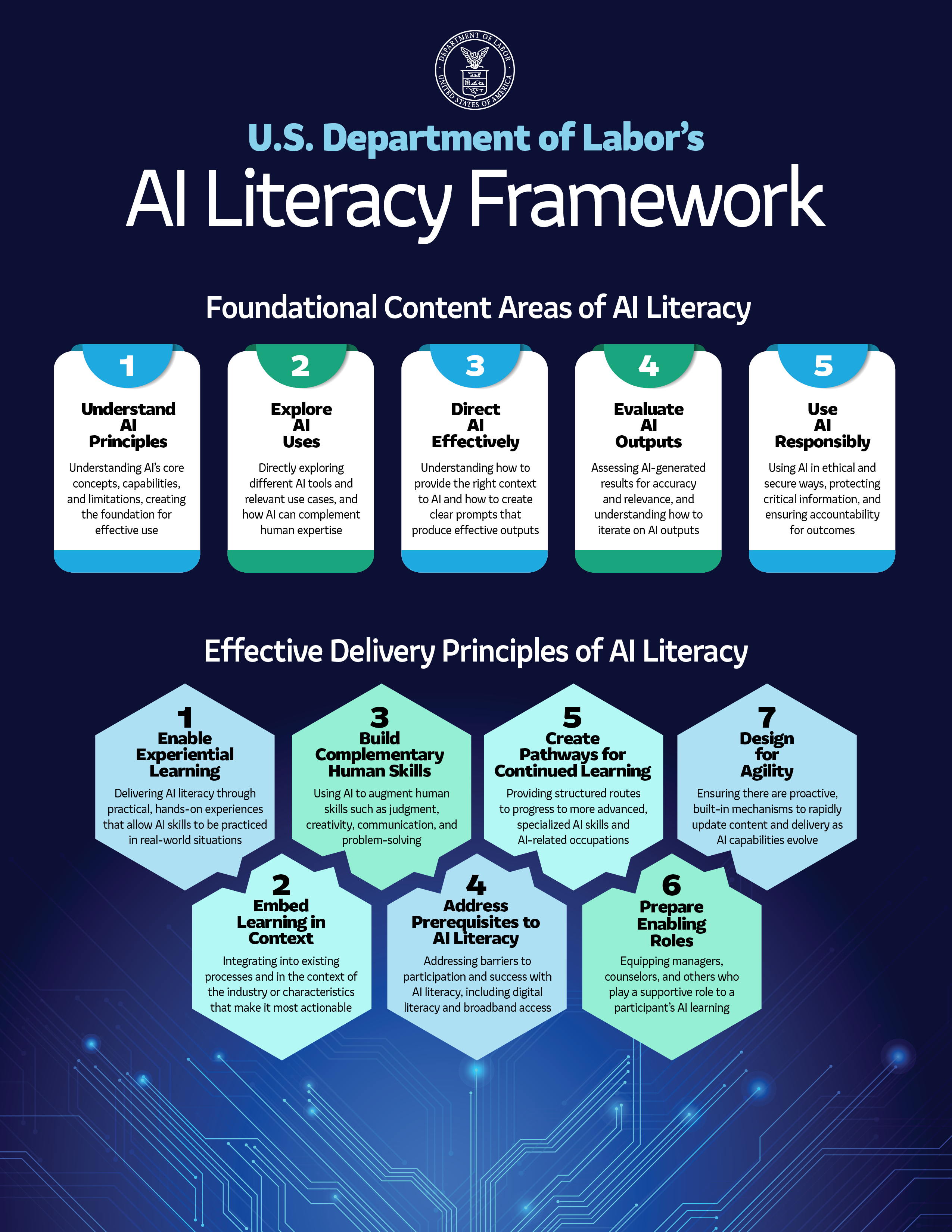
Hands on, applied learning emerged as a central topic of the discussion. Panelists agreed that the most effective learning happens on the job, where individuals use AI to improve real workflows and see immediate impact. From drafting reports to analyzing data, building comfort through practice was seen as more valuable than mastering any single platform. Rather than focusing on tool-specific training, the panel members emphasized the need for foundational skills, including data literacy, real world workflow design evaluation, and critical thinking. An Accenture representative reflected a growing agreement that sustainable AI readiness requires applied, iterative learning, and that training programs should build confidence, curiosity, and the ability to adapt across changing tools and contexts. This approach mirrors the U.S. Department of Labor’s AI Literacy Framework, which promotes hands-on education that helps workers learn how to think critically about AI, not just how to use it.
As the webinar came to a close, panelists offered tangible advice for navigating the evolving AI landscape:
For job seekers;
- Stay curious and proactive.
- Use AI to draft reports, analyze data, or brainstorm ideas, but always edit, verify, and personalize.
- Demonstrating how you’ve used AI to improve your workflow can make you stand out to employers.
For training and education partners;
- Create hands-on, outcome focused learning experiences.
- Courses should require learners to prompt, critique, and refine AI outputs and measure success through real impact, like faster workflows and improved decision making.
- Intentionally strengthen human skills such as critical thinking, judgment, communication, adaptability, and creativity, which AI can support but not replace.

As they closed out the event, the employer panel agreed that AI’s role in the workplace is evolving quickly but remains focused on human decision-making. Rather than replacing jobs, AI is changing how tasks are completed and the skills required to do them. As organizations and education systems across the capital region continue to integrate AI into their operations, the shared challenge will be to ensure that workforce systems evolve just as intentionally, equipping people not only to use AI but to lead alongside it.
The full recording of The Changing Landscape of Work: Keeping up with Emerging Technologies Webinar, is available here. For more information about how Valley Vision is helping lead the Capital Region in this matter, check out the We Prosper Together Regional Plan.
Building a Region That Works: Aligning Jobs, Infrastructure, and Opportunity
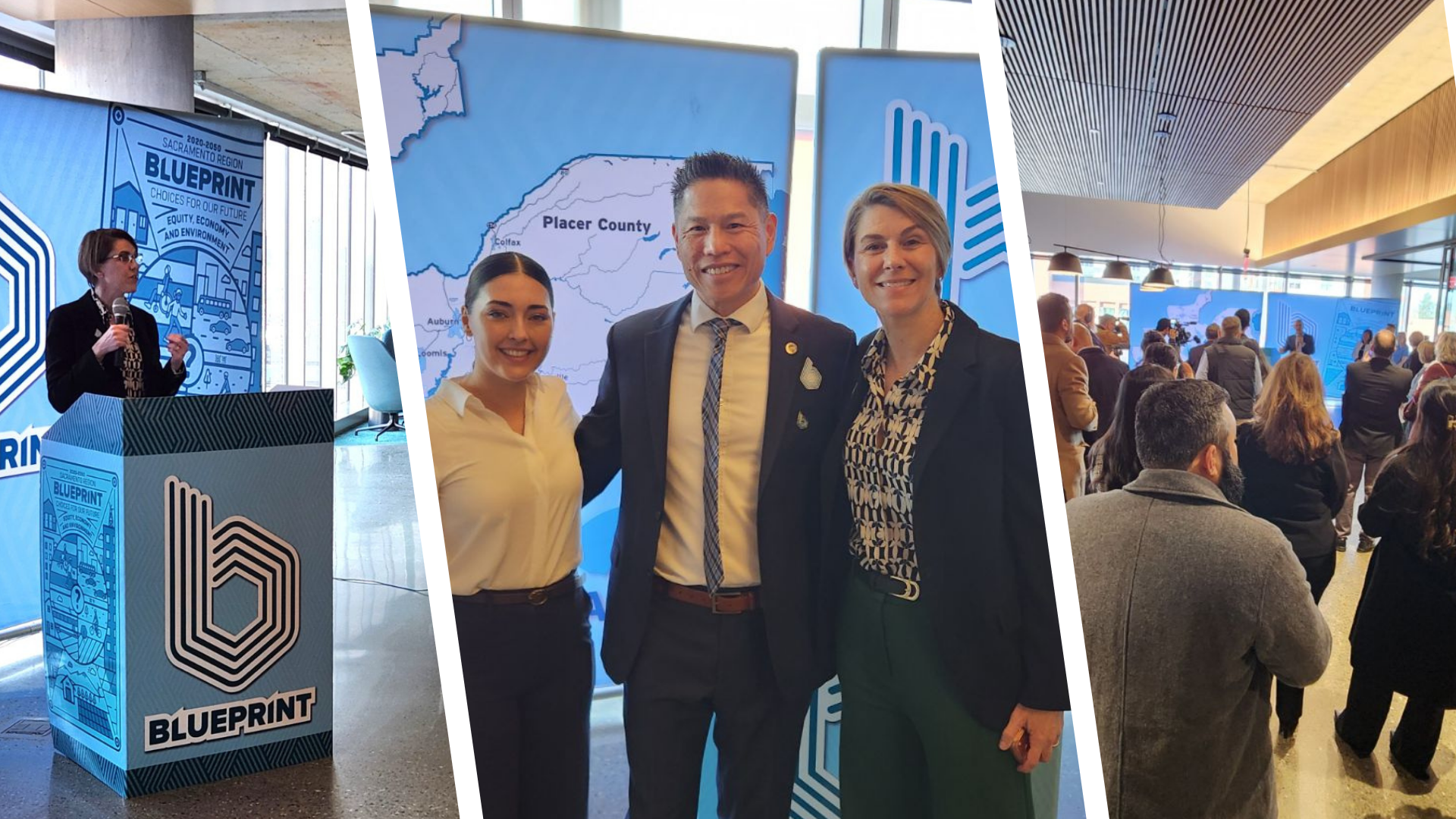
When the Sacramento Area Council of Governments (SACOG) released its newest Blueprint in January 2025, it did more than set a long-term direction for growth – it reinforced a practical truth the Capital Region has been proving for years: Our region’s future success depends on aligning transportation, housing, and land use with the growth of good jobs and community investments – so both urban and rural economic centers are connected, accessible, and positioned to thrive.
At Valley Vision, that alignment has been at the heart of our work with SACOG for more than two decades. Since partnering to engage the community around the region’s first Blueprint in 2004, Valley Vision and SACOG have worked side by side to advance shared economic, environmental, and equity goals – staying engaged not just in planning, but in how those plans are implemented on the ground. That collaboration deepened in 2016 with the launch of the Prosperity Partnership, a formal collaboration between SACOG, Valley Vision, the Greater Sacramento Economic Council, the Sacramento Metropolitan Chamber of Commerce, and the Sacramento Asian Chamber of Commerce. The Partnership was created to intentionally align transportation and housing investments with economic growth, workforce needs, and environmental outcomes – ensuring that regional growth translates into opportunity and improved quality of life across communities.
The Prosperity Partnership ushered in a major investment from the state of California through CA Jobs First, which resulted in We Prosper Together, our region’s roadmap for economic growth. Together, The Blueprint and We Prosper Together plans are aligned so that economic growth doesn’t happen in isolation, but in places where people can actually access opportunity.

Growing the Right Industries in the Right Places
The Capital Region is diversifying its economy around sectors where we already have strong assets – and where growth translates into good-paying jobs.
One of the clearest examples is advanced and precision manufacturing, particularly semiconductors. The region’s semiconductor activity is growing at a rate 26 times more concentrated than the national average, supported by firms like Bosch in Roseville and Solidigm in Rancho Cordova. These companies are anchoring economic centers that depend on access to training and talent, reliable and modern transportation infrastructure, and nearby housing – exactly the conditions the Blueprint is designed to support.
Biotechnology is another cornerstone. The Capital Region’s unique blend of agricultural abundance and research excellence has positioned it as a hub for biotech innovation—from food and agriculture to medicine and medical technologies. Anchored by University of California, Davis and UC Davis Health, and strengthened by assets like Aggie Square, this sector is translating research into real-world applications, startups, and jobs.
In both cases, our community colleges and universities, in partnership with municipalities and workforce partners, are building industry-aligned pipelines so residents – especially those historically excluded from the innovation economy – can access these careers.

Measurable Results
Both We Prosper Together and the SACOG Blueprint are delivering results. For example, 12,500 housing units were completed in the region in 2024, representing a near two-decade high in new housing construction. This annual level surpasses the near-term growth projection in the 2025 Blueprint plan. In fact, when adjusting for population, the SACOG region has led California in housing production not just this year, but for eight years in a row (SACOG Regional Progress Report).
We Prosper Together is also showing promising results. Through We Prosper Together, the region has already secured and awarded $9 million across 22 projects, leveraging an additional $6.7 million and delivering concrete outcomes:
- 12 new workforce training programs
- 826 underserved residents connected to workforce pipelines
- 170 organizations with increased capacity to deliver results
- Stronger economic centers in manufacturing, biotech, healthcare, food systems, and clean energy
Together these outcomes reinforce the importance of aligned strategy: creating job and training opportunities, housing near job centers, transportation options that expand access, and land use strategies that support infill and reduce congestion.

Looking to the Future
Looking ahead to 2050, success means a Capital Region with multiple vibrant job centers connected by safe roads, efficient transit and trails; revitalized commercial districts; and a diversified economy anchored in biotechnology, advanced manufacturing, healthcare, and sustainable food systems. It means rural communities that are economically strong and climate-resilient, and an innovation economy that more people can participate in. Valley Vision is proud to work alongside SACOG and many civic, business, and community partners to ensure that alignment continues – so that growth translates into opportunity, and plans translate into results.
More information and coverage:
- Capital Public Radio: Insight with Vicki Gonzalez – Building the Sacramento Region
- CBS13: Sacramento region adopts long-term blueprint to plan housing, jobs and transportation
- Onsite Observer: SACOG adopts 2025 Blueprint outlining growth through 2050
- KVIE News Minute: SACOG Begins 25 Year Growth Plan
To keep up with Valley Vision’s work to advance livability in the Capital Region, subscribe to our Vantage Point email newsletter!
Evan Schmidt is Valley Vision’s Chief Executive Officer.