From Frontline to Leadership: Farmworker Workforce Development in Practice
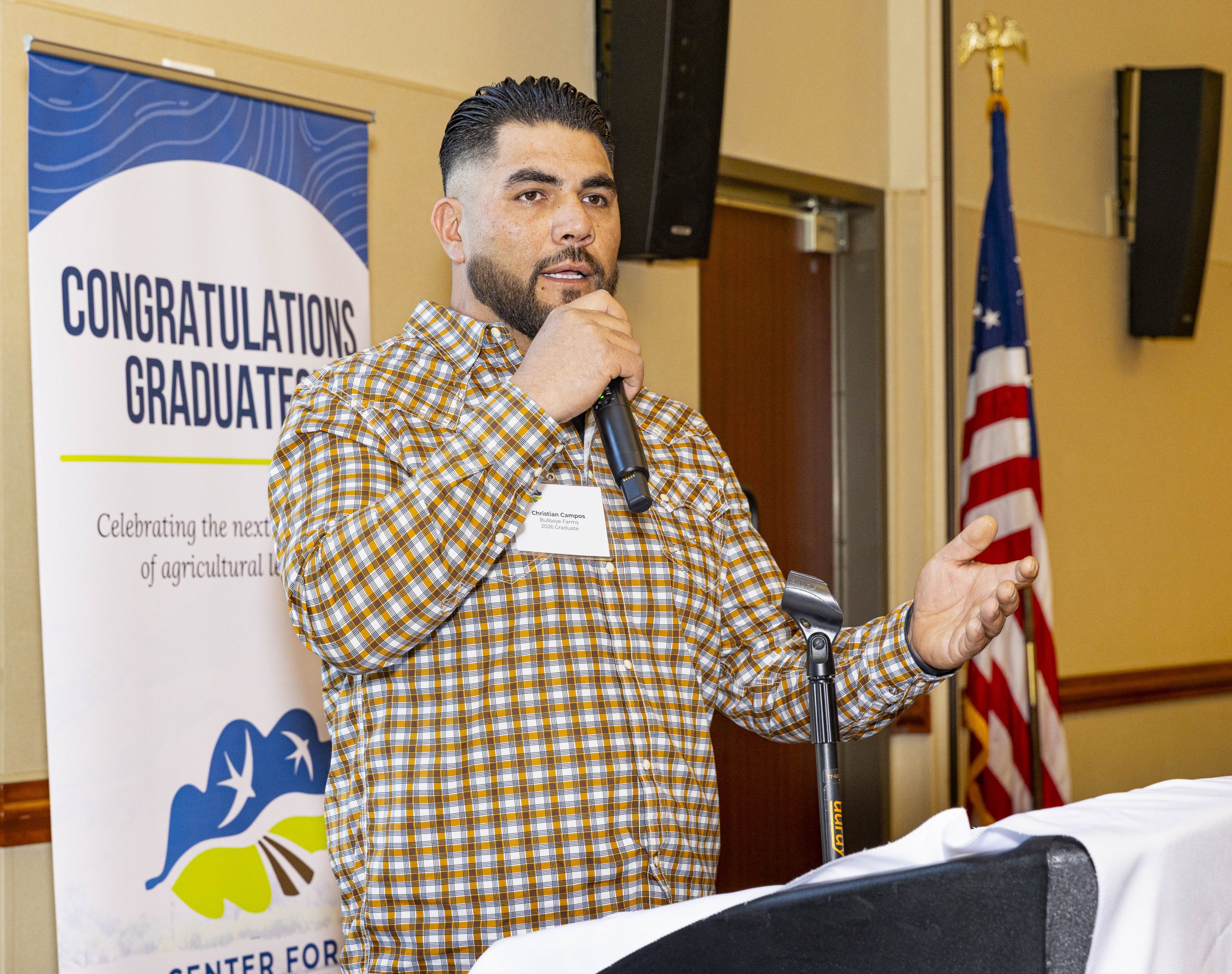
Photo credit: Charles Vincent McDonald
Over the past two years, the AgHiRE Program has grown into a coordinated regional effort to strengthen frontline agricultural leadership across Northern California. Led by the Center for Land-Based Learning and supported by partners including Valley Vision, the program grew out of a shared recognition among employers and workforce partners that many experienced workers already have significant responsibility and have strong potential to advance further into supervisory roles, and that targeted investment in language, digital, and regulatory skills can help unlock that progression in a more structured and supported way.
Early design conversations, led by agricultural employers alongside workforce and education partners, focused on what advancement actually looks like in day-to-day agricultural work. English for workplace communication surfaced as a foundational need, alongside digital literacy, as farm operations continue to modernize, and a shared concern about regulatory and safety knowledge, ranging from wage-and-hour compliance to heat-illness prevention and workplace responsibility. From those discussions, AgHiRE took shape as a 90-hour structured, cohort training model for participants, designed to be practical, applied, and closely tied to real workplace conditions rather than lecture-based instruction.
The first full cohort launched in late 2024, bringing together over 20 participants across 12 employers and a wide range of agricultural operations. Many learners were already functioning as informal crew leads, positioned between frontline teams and management. Over several months of instruction, and in collaboration with education partners such as Woodland Adult Education, the Forum, and YoloWorks!, they engaged in English as a Second Language (ESL) training tailored to agricultural settings, digital literacy modules delivered through Northstar in Spanish, and foundational content in labor law, workplace safety, and leadership communication.
The program achieved a 96% attendance rate, driven in part by scheduling during the agricultural off-season and offering training during paid work hours. In English language development, 48% of AgHiRE participants advanced to the next ESL level. Across the digital literacy modules, the first cohort averaged above 80% on assessments, reflecting gains in core areas such as email use, file management, basic troubleshooting, and spreadsheet functions. Just as important, students showed increased comfort using these tools in workplace settings to support communication and coordination.
Employers noted clear behavioral shifts following participation. These included greater confidence in communication, more willingness to ask clarifying questions, and increased proactive engagement with management. Several also observed improved coordination within crews and smoother information flow during daily operations. While not always fully captured in formal metrics, these changes were consistently reflected in workplace dynamics, particularly in how the group approached problem-solving, communication, and task execution in real time.
The leadership component became one of the most defining parts of the program. Rather than treating supervision as a job title, the curriculum focused on what leadership looks like in practice: giving clear feedback, managing conflict under pressure, and building trust within teams. Learners were encouraged to bring real workplace scenarios into discussion, grounding the learning in lived experience and making the sessions highly relevant to their roles. Alongside this, regulatory and safety topics were integrated throughout, including wage-and-hour rules, heat-illness prevention, harassment and workplace-safety expectations, and the increased responsibility that comes with supervisory authority.
By March of 2025, the first cohort cycle culminated in a graduation held at the Capay Valley Health and Community Center. This marked the program’s first formal completion milestone, bringing together participants, families, employers, and partners to recognize advancement into more defined supervisory roles.
Building from that foundation and responding directly to participant and employer feedback, the program evolved to better meet learners where they are. ESL and digital literacy instruction were each divided into two levels, allowing participants to engage with content that more closely matched their existing skills and learning pace. In addition, an advanced cohort was introduced for returning Year 1 participants, creating a clear pathway for continued skill development and deeper engagement. This second implementation, with 32 trainees enrolled from 11 partner farms, reflects both continued demand and the model’s adaptability across regions.
In March of 2026, the program reached a milestone with its second graduation at the Woodland Community Center. The event brought together participants, families, employers, and partners to recognize completion and advancement. Rather than standing alone as a celebratory moment, the graduation reflected something broader: participants stepping more fully into supervisory roles they were already growing into within their workplaces.

Photo credit: Charles Vincent McDonald
Employers across both regions have described similar patterns of impact: increased confidence among participants, stronger communication within crews, and improved ability to anticipate and respond to workplace needs. These changes reflect the program’s intent to strengthen the “in-between” layer of leadership that is often critical in agricultural operations but rarely formally supported through training.
Valley Vision’s role in AgHiRE has centered on supporting coordination across partners, facilitating employer and advisory engagement, and helping align the program with broader regional workforce goals. The Center for Land-Based Learning continues to lead program delivery, with AgHiRE functioning as a collaborative model shaped by employers, educators, and community organizations working together over time.
As of August 2025, AgHiRE has been supported by the California Jobs First We Prosper Together initiative. This funding has enabled the program to explore expanding access to neighboring counties, including Colusa, Yuba, and Sutter counties, while also creating space to refine and adapt the model for different agricultural contexts. The project will continue to assess the feasibility of scaling their worker upskilling curriculum in these additional disinvested agricultural communities, strengthening alignment with employer needs and ensuring the curriculum remains practical and relevant to day-to-day operations. This effort focuses on maintaining clear, accessible pathways for Spanish-speaking farmworkers in rural areas to advance into supervisory roles.
This project and approval for worker upskilling reflect a simple but important reality: workforce advancement is not driven by a single skill, but by the combination of communication, confidence, technical ability, and trust. When those elements come together, the impact is felt not only by individual cohorts but across crews, operations, and the broader agricultural system they support. As AgHiRE continues to expand through additional cohorts and regional growth supported by We Prosper Together, the emphasis now is on refining and scaling what’s already been tested. That includes keeping training closely tied to day-to-day work, staying responsive to employer feedback, and making sure the structure remains realistic for both workers and operations. The focus remains on continuing to build pathways for experienced frontline workers to step into leadership roles with the tools they need to do so well, and on strengthening the alignment among training, employer needs, and on-the-ground realities of agricultural work.
To keep up with Valley Vision’s work to advance livability in the Capital Region, subscribe to our Vantage Point email newsletter!
————————————-
Liz Kilkenny is Valley Vision’s Workforce Project Coordinator.
Caitlin Blockus is Valley Vision’s Workforce Senior Project Manager.